
The Canadian wine world is constantly expanding, and curiosity about wine is growing. As ONAV Canada, we are developing a course aimed at wine enthusiasts and curious explorers, with a professional approach that remains accessible to everyone. In this context, the concept of the Wine Hunter also emerges: a figure driven above all by curiosity and by the ability to observe the territory in search of places where particular wines, lesser-known grape varieties or true wine rarities might find a home.
The Sommelier and the Technical Wine Taster operate primarily within the worlds of restaurants, commerce and wine production; the Wine Hunter, on the other hand, observes the territory, studies the characteristics of an environment and may identify places where grape varieties capable of producing wines of particular interest could be experimented with or developed.
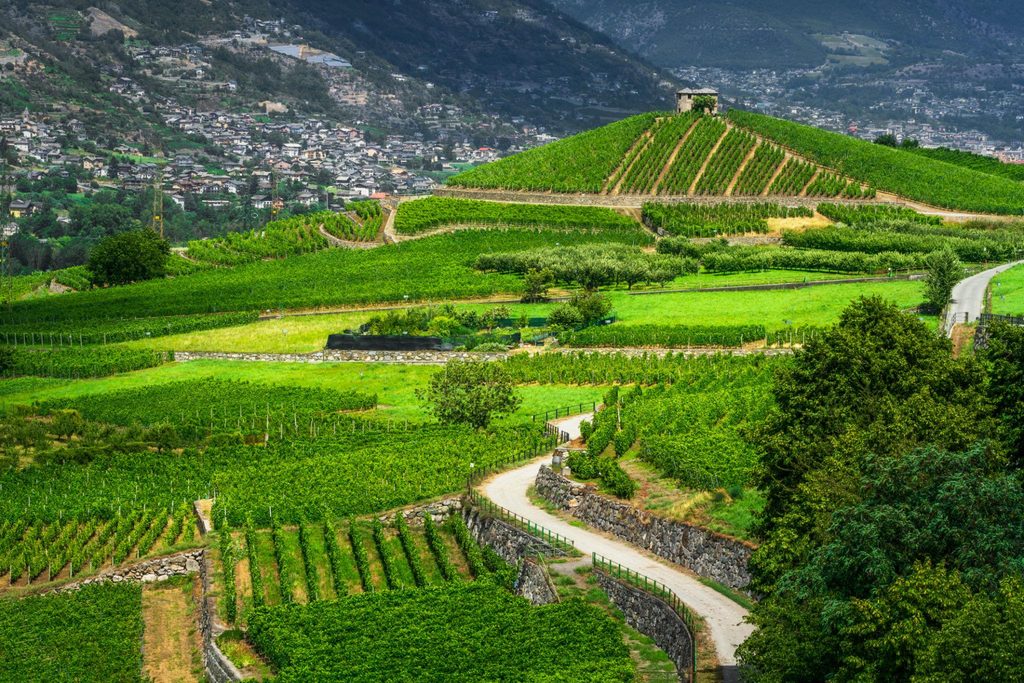
Looking at the Canadian landscape, so often dominated by mountains, I naturally found myself thinking of Valle d’Aosta. Valle d’Aosta possesses extraordinary vine biodiversity concentrated within a very small vineyard area. In this Alpine environment, soils of glacial, morainic and colluvial origin, often rich in coarse fragments and characterised by considerable variability, have accompanied over the centuries the selection of local grape varieties capable of adapting to difficult conditions.
Some of these grape varieties, once little known or even grouped under local denominations, now represent genuine rarities of Valle d’Aosta’s viticultural heritage. Among them we find Cornalin, Vuillermin and other varieties that tell the story of a viticulture built in close relationship with the mountains.
The interesting point, however, is not simply to ask whether a grape variety from Valle d’Aosta could be cultivated in Canada. The question is different: can we find in Canada a territory that, in terms of geological, morphological and climatic characteristics, presents conditions sufficiently close to those in which that grape variety developed its own characteristics?
Starting precisely from the presence of morainic soils and the glacial origin of many Canadian wine-growing areas, our research leads us to British Columbia and, in particular, to the Okanagan Valley. Here too, the landscape has been profoundly shaped by glaciers, and the territory presents a remarkable variety of soils, exposures and microclimates.
But it is not enough to say that both territories were shaped by glaciers. It is necessary to observe how ice, water, mountains and climate have created different environments.
In Valle d’Aosta, vineyards often grow on steep slopes, terraces and alluvial fans, where exposure becomes essential in order to make the most of the available solar radiation. Altitude, the morphology of the valley and the presence of the mountains also determine a relatively short growing season. The soils, often rich in stones and coarse materials, favour drainage and require the vine to cope with water availability that must be carefully managed.
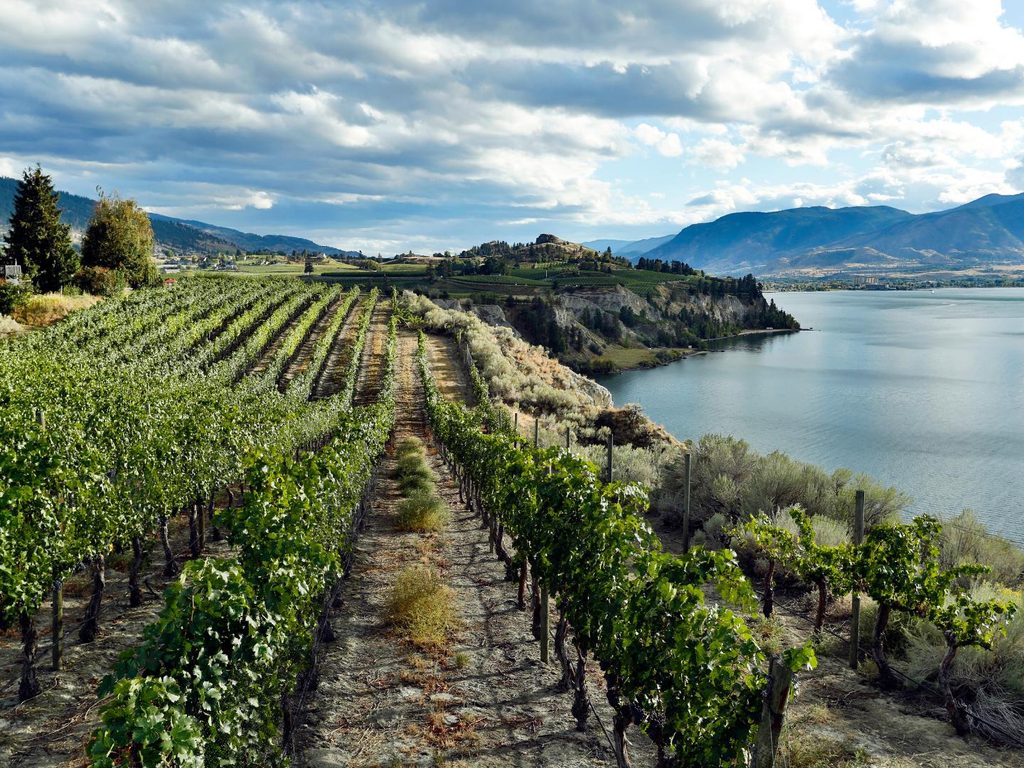
In the Okanagan, by contrast, we find broad slopes, terraces and surfaces shaped by glacial and fluvial activity, with soils that can alternate between gravel, sand, silt and rocky material. The climate is drier and summers can be very bright and warm, while cool nights allow a good acidic component to be preserved.
It is precisely this combination of daytime warmth and nighttime cooling that makes some areas of British Columbia particularly interesting for the research of grape varieties capable of ripening while maintaining freshness.
Within the Okanagan, however, not all areas can be considered in the same way. For Cornalin, I would not necessarily look for the warmest place in the valley. Excessive heat could favour excessively rapid ripening, increasing sugar levels and wine volume at the expense of aromatic precision and freshness.
Instead, I would look for a location where the heat could be sufficient for phenolic ripening, but where exposure, altitude, ventilation and nighttime temperatures could maintain balance.
It is in this research that some areas of the central Okanagan, such as Naramata Bench and Okanagan Falls, become interesting, characterised by slopes and glacially influenced surfaces with good drainage, favourable exposures and a good diurnal temperature range.
Here, Cornalin could find conditions very different from those of Valle d’Aosta, but sufficiently interesting to deserve experimentation.
In Valle d’Aosta, Cornalin expresses its identity through a mountainous environment in which ripening, acidity, tannins and aromatic character must find a balance that is often difficult to achieve. In a brighter and thermally more favourable Canadian environment, we might instead expect greater fruit ripeness, a fuller fruit character and broader structure.
Freshness would not necessarily be lost, because the nighttime temperatures of the Okanagan can help preserve it, while the different balance of soil and climate could modify the way the grape variety expresses its spicy and tannic character.
The result, naturally, would not be the Cornalin of Valle d’Aosta simply transferred to Canada. It would be another wine, produced from the same grape variety but interpreted by another territory.
We could imagine a deeply coloured wine, with riper and more intense fruit, more mature tannins and greater structure, but supported by good acidity and a spicy component capable of recalling, at least in part, the personality of the original grape variety.
This is the question that interests the Wine Hunter: not whether we can simply plant an Italian grape variety in Canada, but whether we can find a territory capable of engaging in a dialogue with that grape variety.
Because when a grape variety encounters a new environment, it does not bring with it only its name: it brings a history, a genetic memory and an ability to interpret the place.
And the real interest begins precisely when we ask ourselves what new expression might emerge from that encounter.
Our task is to be professionally curious, while at the same time seeking concrete solutions for those who wish to transform their curiosity into research, offering Canadian wine researchers new possibilities, new territories and new choices to explore.
For anyone wishing to explore this subject further or receive additional information, you can contact us at canada@onav.it.