
The Canadian wine world is constantly expanding, and curiosity about wine is growing. As ONAV Canada, we are developing a course aimed at wine enthusiasts and curious explorers, with a professional approach that remains accessible to everyone.
In this context, the concept of the Wine Hunter also emerges: a figure guided above all by curiosity and the ability to observe the territory in search of places where distinctive wines, lesser-known grape varieties or true wine rarities might find a place.
The Sommelier and the Technical Wine Taster operate primarily in the worlds of hospitality, commerce and production. The Wine Hunter, by contrast, observes the territory, studies the characteristics of an environment and may identify places where grape varieties capable of producing wines of particular interest could be tested or brought to prominence.
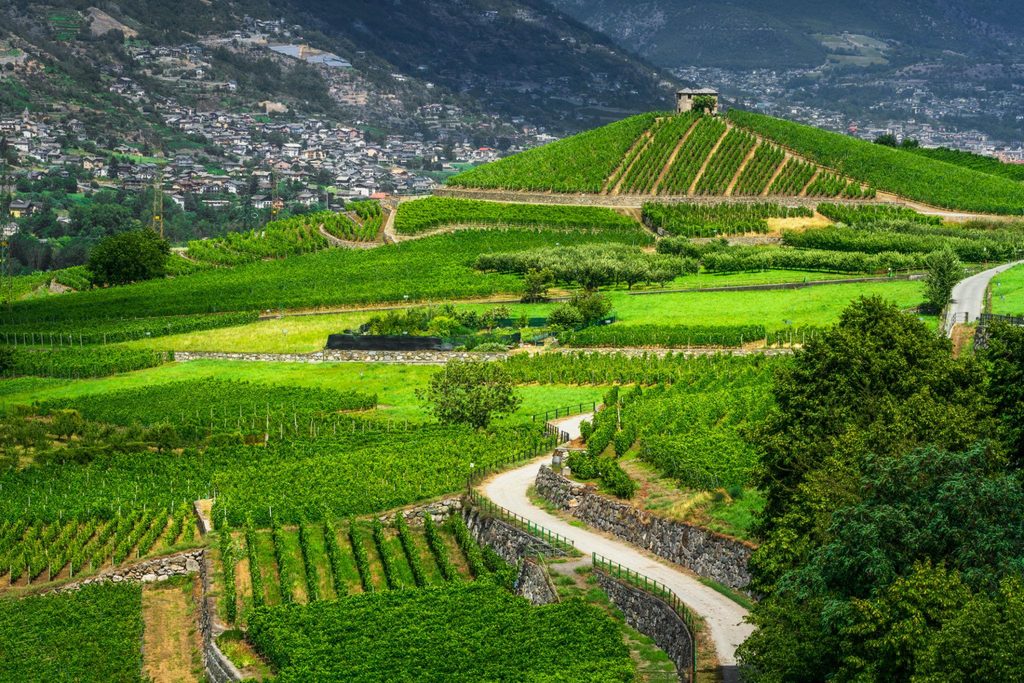
Looking at the Canadian landscape, often dominated by mountains, I naturally thought of Valle d’Aosta. This region possesses extraordinary vine biodiversity concentrated in a very small vineyard area. In this Alpine environment, soils of glacial, morainic and scree origin, often rich in coarse fragments and characterised by considerable variability, have accompanied over the centuries the selection of local grape varieties capable of adapting to difficult conditions.
Some of these varieties, once little known or even confused under local names, today represent genuine rarities of Valle d’Aosta’s viticultural heritage. Among them are Cornalin, Vuillermin and other varieties that tell the story of a viticulture built in close relationship with the mountains. In Valle d’Aosta, Cornalin expresses its identity through a mountainous environment in which ripening, acidity, tannins and aromatic character must find a balance that is often difficult to achieve.
In a brighter and more thermally favourable Canadian environment, we might instead expect greater fruit ripeness, a fuller fruit character and broader structure. Freshness would not necessarily be lost, because the nighttime temperatures of the Okanagan can help preserve it, while the different balance of soil and climate could modify the way the grape variety expresses its spicy and tannic character.
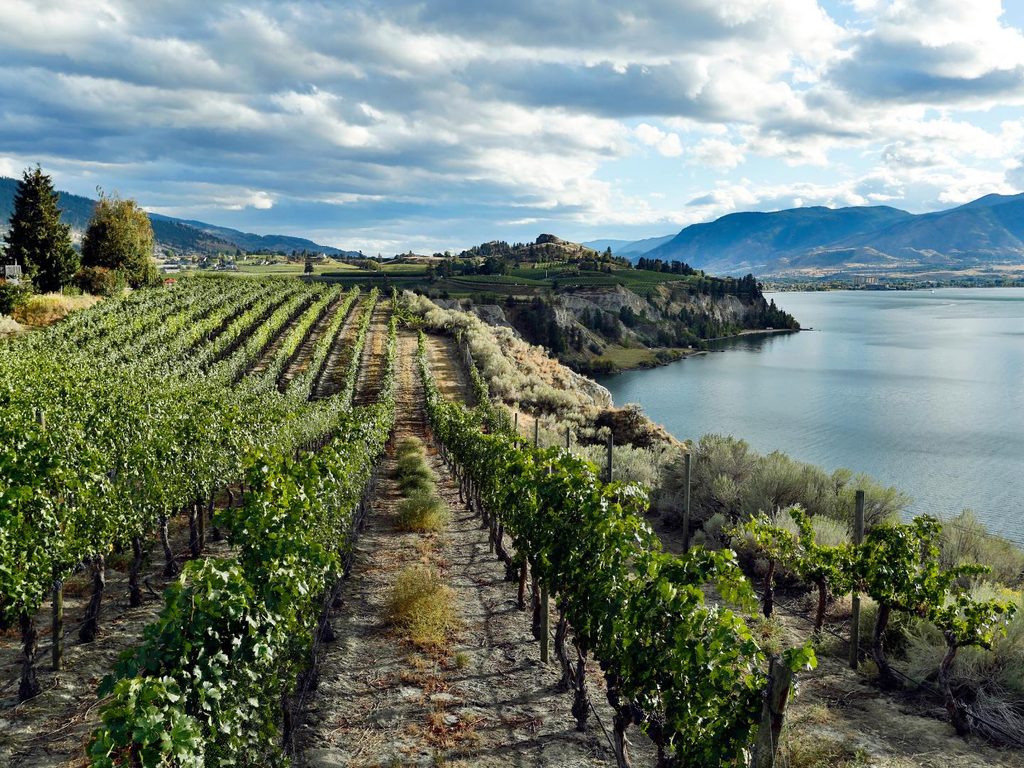
The result, naturally, would not be the Cornalin of Valle d’Aosta simply transferred to Canada. It would be another wine, produced from the same grape variety but interpreted by another territory.
We could imagine a deeply coloured wine, with riper and more intense fruit, more mature tannins and greater structure, but supported by good acidity and a spicy component capable of recalling, at least in part, the personality of the original grape variety.
This is the question that interests the Wine Hunter: not whether we can simply plant an Italian grape variety in Canada, but whether we can find a territory capable of engaging in a dialogue with that grape variety.
Because when a grape variety encounters a new environment, it does not bring with it only its name: it brings a history, a genetic memory and an ability to interpret the place. And the real interest begins precisely when we ask ourselves what new expression might emerge from that encounter.
Our task is to be professionally curious, while at the same time seeking concrete solutions for those who wish to transform their curiosity into research, offering Canadian wine researchers new possibilities, new territories and new choices to explore.
For anyone wishing to explore this subject further or receive additional information, you can contact us at canada@onav.it.