
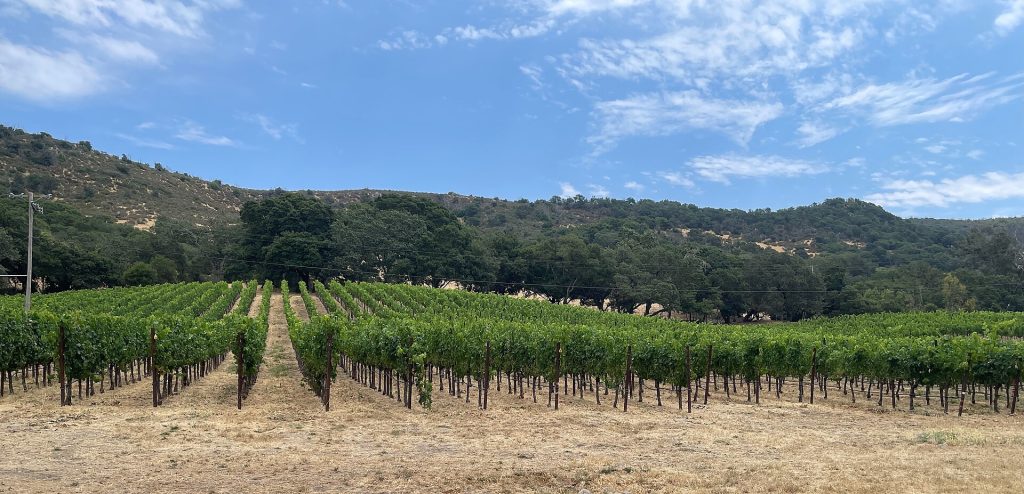
One of California’s oldest family-owned wineries is now facing a crisis that does not come from nature, but from a profoundly changing wine market.
There are wineries where the word history is more than a journalistic description. It lives in the land, the vineyards, the cellars, and above all in the families who, generation after generation, have continued to care for them. Gundlach Bundschu, in Sonoma Valley, is one of them. Founded in 1858, it is the oldest winery in California still in the hands of the same family. Six generations of the Bundschu family have lived through almost 170 years of American wine history, facing challenges that could have brought almost any business to an end.
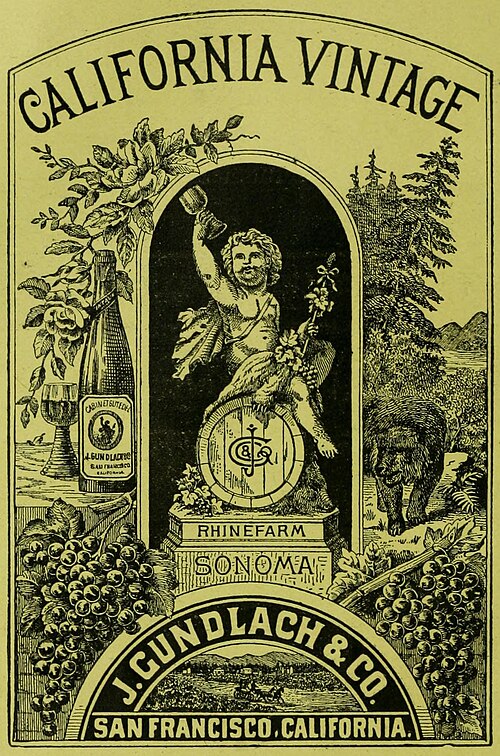
Today, however, the family is facing a very different kind of crisis. On September 23, 2026, Gundlach Bundschu filed for protection under Chapter 11 of U.S. bankruptcy law. The company reports more than $37 million in debt and is seeking to reorganize its financial position while continuing to operate the winery and tasting room. This, therefore, is not simply the story of a winery that has closed. It is the story of a family trying to prevent 170 years of winemaking heritage from being lost.
A Story That Began in 1858
In 1858, Jacob Gundlach founded what would become Gundlach Bundschu. Since then, generations, farming techniques, markets, and consumers have changed. The family’s connection to Sonoma Valley, however, has remained. The story has never been a straight line. The winery survived phylloxera and, in 1906, the San Francisco earthquake and the devastating fire that followed. The disaster destroyed the family home, offices, warehouses, and winery facilities, along with nearly one million gallons of wine.
Then came Prohibition. When commercial wine production was prohibited in the United States, the family was forced to close the business and liquidate much of its property. They nevertheless managed to retain part of their land and their home. After Prohibition ended, the Bundschus gradually returned to viticulture, initially selling their grapes to other major California wineries. In the 1970s, the family revived its own wine production, and the modern winery opened in 1976.
Even Fire Had Not Stopped It
In 2017, another devastating fire struck the family. The historic Bundschu family home was destroyed by the Tubbs Fire. The family survived, but lost its home. The house was eventually rebuilt. Today, however, that same family property has become part of the collateral used to support the company financially. According to documents filed in the bankruptcy proceedings, some of the family’s personal assets have been used to support the business. It is a detail that helps explain how deep the connection between the family and the winery really is. This is not simply a financial investment.
The 2020 Investment
The most recent turning point came in February 2020. At a time when the California wine market still appeared to offer significant opportunities for growth, Gundlach Bundschu purchased, using debt financing, a roughly 60-acre property in Glen Ellen. The objective was to create a second platform for growth through Abbot’s Passage, the brand founded in 2016 by Katie Bundschu, while further developing the winery’s hospitality and wine tourism activities.
Then, just one month later, the pandemic arrived. Tasting rooms closed, tourism came to a halt, and the entire wine hospitality model was disrupted. According to documents filed with the court, the debt incurred for the 2020 acquisition became the immediate cause of the company’s financial difficulties. The expected growth did not materialize, while the subsequent contraction of the wine market further aggravated the situation. Abbot’s Passage closed its winery and tasting room in June 2026. The family subsequently decided to refocus its efforts on the historic Gundlach Bundschu winery and the Rhinefarm property.
The Problem Is Bigger Than Gundlach Bundschu
This is what makes the story particularly important for anyone following the wine world. Gundlach Bundschu is not an isolated case. California is going through a major transformation of its wine industry.
In the United States, demand for wine has declined significantly in recent years. According to data reported by the Associated Press, wine sales by volume have fallen by more than 20 percent over five years, while approximately one-quarter of California’s wine vineyards have been removed or are no longer actively farmed for wine grapes.
The problem therefore begins before the winery. When demand for wine declines, demand for grapes declines as well. And when growers cannot sell their grapes, the problem reaches the vineyard itself. In 2026, according to the Associated Press, approximately half of California’s wine-grape crop entered harvest without a purchase contract, compared with the 70–80 percent that would normally be covered in a typical year. For some growers, the consequences have been severe: selling at a loss, leaving grapes on the vines, or removing vineyards altogether.
A Market in Transition
There is no single cause behind the crisis. American consumers are changing their habits. Younger generations are drinking less alcohol than in the past, while wine faces growing competition from craft beer, ready-to-drink cocktails, hard seltzers, and other beverages. At the same time, the traditional wine consumer is also changing with age.
These factors are compounded by excess supply, production costs, changes in distribution, difficulties in wine tourism, and, more recently, international trade tensions. For a heavily indebted winery, a decline in demand can quickly become a much larger problem.
Gundlach Bundschu has tried to respond. Over the past three years, the company has reduced its expenses by more than 40 percent, approximately six million dollars, while the number of employees has fallen from 102 to 63. But even such a significant reduction in costs has not been enough to offset the burden of the debt.
What Does Chapter 11 Really Mean?
This point is important. Chapter 11 does not necessarily mean that a company has ceased operations. It is a legal process that allows a financially distressed business to continue operating while it attempts to reorganize its debts and financial structure.
Gundlach Bundschu has stated that it intends to remain operational during the process and is also exploring the possibility of bringing in a new investor. The family, however, could lose majority control of the company it has managed for six generations.
This may be the most difficult aspect of the story to understand if we look at it only through financial figures. For a wine-growing family, losing majority ownership of a company is not simply losing an investment. It means risking the interruption of a family continuity that began in the nineteenth century.
The Future of a Winery — or the Future of a Region?
Jeff Bundschu, who leads the company together with his sister Katie, has emphasized the family’s desire to find a solution that will allow the winery to remain operational and maintain its historic connection to Sonoma Valley.
And this is where the Gundlach Bundschu story takes on a meaning that goes beyond the balance sheet of a single winery. A historic winery is not simply a producer of wine. It is work. It is landscape. It is agriculture. It is tourism. It is memory. It is part of a region’s identity.
When a winery of this kind faces serious difficulties, the consequences can affect employees, grape growers, suppliers, restaurants, tourism, and the wider community that has grown around it.
After 170 Years, There Is One Question
Gundlach Bundschu has already demonstrated its ability to survive events that once seemed impossible to overcome. It survived phylloxera. It survived the 1906 earthquake and fire. It survived Prohibition. It survived California’s wildfires. It survived the pandemic.
This time, however, the threat is much less visible. It is not a vine disease. It is not an earthquake. It is not fire. It is a changing market.
And perhaps that is the greatest challenge for a winery built across six generations: surviving a crisis is not enough. The real challenge is understanding what the world of wine will look like when the crisis is over.
Today, Gundlach Bundschu remains open. Its story, therefore, has not yet reached its final chapter. The real question is whether the seventh generation will be able to continue telling that story on the same land where it all began in 1858.
Because after almost 170 years, what is at stake is not simply a winery. It is a piece of California’s wine history.
Marisol / Augusto