
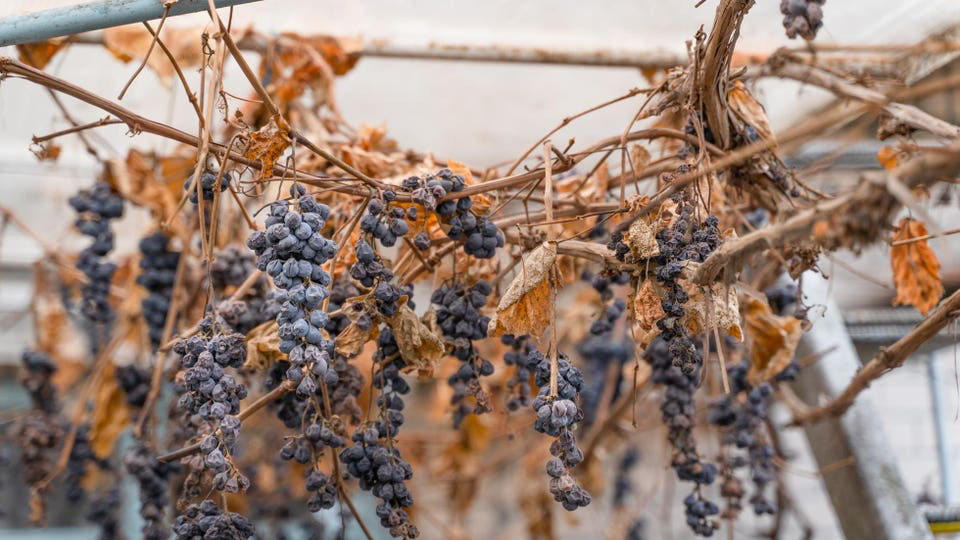
The crisis affecting the American wine market is no longer limited to sales and retail shelves. In California, one of the world’s most important wine-producing regions, the difficulties are now reaching the vineyards themselves, where many growers are finding it increasingly difficult to find buyers for their grapes.
According to an Associated Press analysis published on September 22, 2026, around half of California’s wine grapes harvested this year entered the harvest season without a purchase contract. A situation that would have been difficult to imagine only a few years ago in one of the most important wine-producing states in the United States. The problem reflects a profound change in demand. In the United States, according to data reported by the Associated Press, wine sales declined by 23% between 2020 and 2025, while overall consumer spending on wine fell by 22%. For grape growers, the consequence is immediate: when wineries need less fruit, part of the crop is left without a commercial destination.
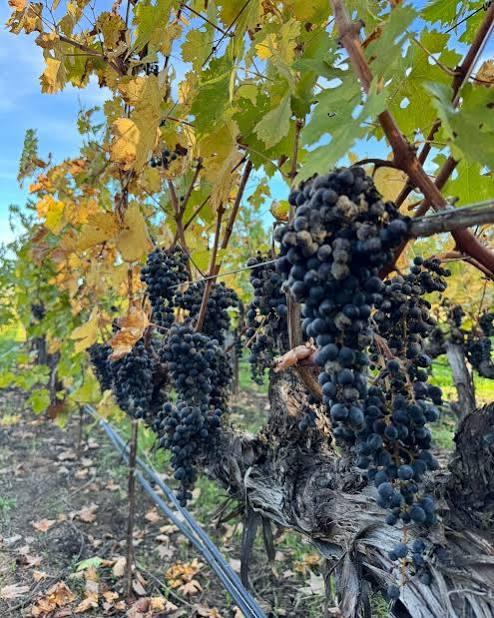
Some growers are therefore facing a difficult choice: leave the grapes on the vine, risking the loss of the costs invested throughout the growing season, or remove the vineyards and use the land for crops considered more in demand by the market. The phenomenon is not limited to individual farms. According to figures cited by the Associated Press, about one-quarter of California’s vineyards have been removed from production or are no longer actively being farmed for wine grapes. Behind these figures lies a transformation affecting the entire wine sector. Wine is facing changes in consumption, the habits of younger generations, and consumer choices, while producers and markets must deal with demand that is less predictable than in the past. The California situation is also part of a broader international picture. According to the International Organisation of Vine and Wine (OIV), global wine consumption fell by 2.7% in 2025 compared with the previous year and by 14% compared with 2018. The contraction in international demand is therefore adding pressure to the world’s major wine-producing regions. California is particularly significant because it accounts for a substantial share of U.S. wine production and has a highly developed, technologically advanced supply chain strongly oriented toward the market. When demand changes so quickly, the effects inevitably move upstream through the supply chain, reaching the vineyard itself. But the issue is not only economic. Removing a vineyard means ending an investment that often takes years to reach full productivity. It also changes the agricultural landscape and, in many cases, means giving up part of a region’s viticultural identity. For this reason, the situation in California deserves attention well beyond the United States. The wine market is entering a phase in which producing good wine alone will no longer be enough. It will become increasingly important to understand how much to produce, for whom, and in what way. Quality remains fundamental, but it must now interact with price, changing consumer behaviour, communication, and a demand that is itself evolving. The California grape crisis therefore illustrates a reality the wine world can no longer ignore: when consumers reduce demand, the effects can reach all the way to the roots of the vine. And when grapes no longer find a market, the problem is not limited to a single harvest. It can alter the future of vineyards themselves. Sources: Associated Press, Terry Chea, September 22, 2026; International Organisation of Vine and Wine (OIV).