
Rediscovering hidden treasures (grape varieties) will be a dear topic to me, one I will always address, because I feel it’s right and proper to enrich the knowledge of those who love this nectar. It’s too easy to recall the great names, but our heritage also includes great wines with names unknown to the public, such as Baratuciàt. ONAV Canada will also address this.
Baratuciàt is a true winemaking treasure, found in the heart of the Piedmont valleys, amidst the breathtaking landscapes of the Cenischia and Susa Valleys. This little-known but highly prized grape variety, Baratuciàt, is considered a true gem of the Piedmont hills, with a fascinating history and winemaking potential worthy of exploration.
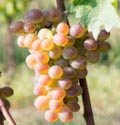
The name of this grape variety appears to derive from the Piedmontese dialect expression “berla ‘d ciàt,” which literally means “cat poop,” a picturesque term referring to the elongated shape of its berries. However, this somewhat eccentric and colorful name is merely an illusion, as Baratuciàt is anything but a common grape variety.
A variety sought after and studied by modern ampelographers in recent years, following a “gap” of almost a century and where previously analyses had been carried out by the Ampelographic Centre of Turin towards the end of the 19th century, which certified the presence of this vine in the Lower Susa Valley.
The vine is currently found in scattered vines in the old vineyards of the municipalities of Villarbasse, Buttigliera and Almese and has been the subject of both agronomic and oenological study and characterization.
DNA molecular marker analysis did not reveal any genetic similarity with other grape varieties from northwestern Italy. However, some genetic similarity emerged between Baratuciàt and Cascarolo, an old white grape variety that appears genetically important to the evolution of the Piedmont varietal assortment.
Baratuciàt, a grape variety with an early vegetative-productive cycle, is highly vigorous and has medium productivity; it generally requires extensive pruning due to the low fertility of its basal buds.
However, it is not particularly demanding in terms of environmental conditions or cultivation practices: budding, which occurs relatively early (about the same time as Arneis), exposes it to the risk of late frosts, so it is recommended to plant it in well-exposed soils not subject to the phenomenon of temperature inversion, which is quite common in Alpine valleys. Baratuciàt is fairly resistant to the main fungal diseases, but in rainy and cold springs it can suffer from coulure, although production is generally consistently good. Vigour can sometimes be excessive, and especially in young vines, fruiting may be delayed.
Oenological Characteristics:
This grape has a high acidity, making it ideal for producing sparkling wine bases. The wine generally has a pale straw yellow color with pleasant green hues, and an intense aroma characterized by predominant notes of green apple and pineapple, with distinctive hints of eucalyptus and hay.
On the palate, the product is very interesting, with a strong structure, balanced, and good acidity. The grapes’ good resistance to mold also makes them suitable for drying, for the production of dessert wines. Despite its extraordinary qualities, Baratuciàt remains a rare grape, and as a result, its wines are truly rare. Only a few producers dedicate themselves to its cultivation, and the pure versions of its wines are even rarer. However, the rediscovery of this hidden treasure has sparked renewed interest among winemakers and wine lovers, who are exploring its potential through experimentation and innovation. It is a vigorous and resistant variety, which thrives in the unique climatic and geological conditions of the Piedmont valleys. The mineral-rich terroir and moderate altitude help give Baratuciàt a distinctive and complex personality, which is reflected in the wine it produces. The wines made from Baratuciàt have a distinctive straw-yellow color, captivating at first glance. On the nose, they reveal delicate and elegant aromas of white flowers, accompanied by subtle notes of fresh fruit. As they age, these wines gain complexity, developing mineral nuances and a range of aromas from pineapple to green apple. Baratuciàt offers wine enthusiasts the opportunity to discover and appreciate the richness and diversity of the winemaking traditions of the Piedmont valleys. With its fascinating history, distinctive aromatic profile, and oenological potential, Baratuciàt certainly deserves to be celebrated as one of the hidden treasures of the Italian wine world.