
Okanagan BC , Winemaker Matthew Fortuna
50 th Parallel Estate Winery
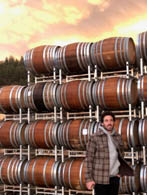
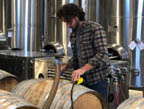
I’ve had this deep love for food and wine since I was very young. My curiosity always leads me to explore something new. I was searching for wineries in the Okanagan on LinkedIn to introduce ONAV (the Italian Organization of Technical Wine Tasters) to winemakers. I came across Matthew Fortuna. Looking at his last name, I thought he was Italian. I contacted him and asked if he was Italian, and the answer was, of course, affirmative. I took the opportunity to introduce ONAV and the role of the Technical Wine Taster. He was very intrigued and told me he wanted to know more about both ONAV and the Technical Wine Taster.
I asked Him to tell me a little about Himself: Born and raised in Niagara Falls, Ontario, I grew up in an Italian-Canadian family.
I spent a lot of time at my grandmother’s house, where she showed us love by always paying great attention to how we ate. It was simple food, with few ingredients, but prepared with much love and hard work. When the larger family gathered, it was always a special moment, and a time when special dishes were also prepared. These are some of the fondest memories of my youth and have shaped my interest in sharing food and wine for the rest of my life.
Niagara Falls is a world-famous tourist destination, so hospitality is a major industry. As a young man, I found myself working in a very nice restaurant, where I had my first real contact with the world of fine wine. Niagara wines were emerging at the time, still developing, and it was with them that I learned the basics of grape varieties, flavors, and aromas. But the most enlightening experience was tasting the complexity of an Oregon Pinot Noir. Thus, I pursued the romantic idea of Pinot Noir-focused winemaking in the mountains of the Pacific Northwest.
This choice met all my requirements: lifestyle, adventure, and learning life skills. The Okanagan Valley is a wonderful valley, with an excellent climate for winemaking and a stunning landscape for a healthy lifestyle. I think it’s truly one of the most beautiful places in the world, and I feel very fortunate to have a life and career here. My approach to winemaking begins in the vineyard. That’s where the hard work really takes place. I enjoyed actively participating in this process and taking the first and most important step of the winemaking year, growing grapes of exceptional quality. Like my approach to winemaking, I rely on technique to ripen and produce quality grapes. I carefully work the canopy year-round to maximize sunlight and airflow, ensuring healthy growing conditions. I’m also environmentally aware, taking care to allow for biodiversity. I use technique more than ingredients to influence the style of the wine. I believe complexity lies in textures; textures retain and release aromas, adding length and structure to the palate. A structured wine is alive and makes you think, feel, and not tire. For this reason, I’m always looking for ways to create textures during fermentation. I love winemaking for its culinary aspect.
I love food, good cooking, flavors and aromas, textures, and the way food and wine enhance each other. I also enjoy the artisanal aspect of winemaking, where mastering one’s technique is the key to good winemaking. It’s a lifelong journey, requiring experience to understand the nuances, but offering only one winemaking experience per year. Every year we have an opportunity to strive to improve and carry forward the lessons of the past. There’s something honest, inspiring, and tactile about winemaking that makes it a truly special part of life.
I completed my training in winemaking and vineyard management at Okanagan College in Penticton, British Columbia. I also worked for many years with some highly qualified winemakers before taking on this role myself. The training never ends, as I’m constantly researching and exploring new techniques to achieve better results in the cellar. This continues in the vineyard, where we’re currently experimenting with methods to improve soil organic matter and overall soil health through cover crop cultivation. Organic practices in the vineyard are very important to me, so I’m constantly exploring ways to become more efficient and sustainable. We’ve also studied the Simonit and Sirch pruning method and have begun integrating it into our pruning and general canopy management. The wonderful part of this profession is the pursuit of improvement, which takes a lifetime to master.
The wines we focus on in our Okanagan Valley area, near the 50th parallel—hence the name—are located at the northern end of our region. We grow grape varieties suited to viticulture in cooler climates. We focus on Alsatian varietals and focus our red winemaking on Pinot Noir. We enjoy long summer days, with plenty of sunlight, and the proximity to a very large lake, which moderates temperatures both in summer and winter. We have interesting stony soils, dominated by granite, which lend a certain depth of structure and minerality.
Augusto, I read your article on Pinot Noir and I think it’s fantastic. It’s truly a difficult grape to perfect, but it expresses the terroir very well, perhaps more than any other varietal. You asked me about a possible collaboration with ONAV. I can only speak for myself at the moment, but I think a collaboration with ONAV would be fantastic. With more details, I could present them to the winery owners, but for now, you can count on me.
Thank you, Matteo, and I’ll be coming to visit you and tour the winery soon.